News | Milestone Films

News

Back to the Drawing Board: Or Why Art is Good For You (or at least, me) and a Great Art School is a Kind of Sanctuary

Posted on January 20, 2013 by Amy Heller | 0 Comments

First thing to know: I have an amazing sister. She knows me from way back—all her life, actually—and she is a kind and loyal friend. So, when she started to suggest that I get back to making art, I had to at least listen. She had been taking drawing classes and feeling really good about flexing new neurons and skills. And she knew that in my deep dark past, I had loved to draw and that I always loved to look at art.

But truly, I was terrified. Making art—strike that—trying to make art is really personal. It can be astonishingly liberating. But it can also be painful. I remembered that feeling of trying to do something and the utter frustration of just totally failing. I knew art could make me cry with helpless rage at myself, the drawing, everything. And my everyday adult existence allowed me to go day to day without that kind of angst. Did I need to invite it back into my life?

Maybe. I did feel an emptiness following the death of my father and the subsequent Sisyphean job of settling his estate, selling his apartment, finding homes and buyers and galleries for the art, books, rugs... I was worn out just remembering it all. And with our only kid in high school, I could foresee an empty nest in my future. And it sounded like fun—scary fun, but still.

Luckily for me, I actually did know where to start to look for a class. When he was younger, our almost-grown son loved to take art classes at a school in a neighboring town. So I knew that The Art School at Old Church was a welcoming place that treated art and would-be artists with love and respect. Even better, I knew and liked the director, Maria Danziger, who had become a friend when Dennis and I ran a film series at the school years before.


So I gathered my courage (really) and called Maria and asked her advice. I wanted a class where I wouldn't freak out--where I would be helped to get over my fear. She suggested I try Polly King's painting class.

I've now been painting in Polly's class for a couple of years and I have shed a few tears—although not many recently. I have made drawings and paintings I actually like and many others I plan to paint over. A couple of my paintings have been displayed in student shows at the school’s gallery and they didn't look too bad... I have made friends with some of my fellow students and occasionally been annoyed with others. This year one of our fellow painting students died unexpectedly, and while she sometimes rubbed me the wrong way, I was sad to hear the news and I remembered her best qualities—her humor, her bold painting style, her love for her family. I guess we have created a kind of community.

In class last week one of my fellow painters remarked on how inspirational the space we work in is. Of course the school itself was once a small church and our studio boasts soaring ceilings and wonderful light. And that reminded me that the school is a place we gather together to share something joyful and communal.  I am not a religious person, so I don't use the “sacred,” but perhaps it applies.


Last fall our school, our community lost a very great friend, leader, artist and teacher. Mikhail Zakin founded the school, inspired generations of potters, stood up for underdogs, hosted visiting artists and led by example and with courage. I knew her a little—and had the privilege of serving on the board for the school alongside her—but I think I really see her scope when I see how much she created and how much she is and will be missed. You can read about her at: http://www.northjersey.com/obituaries/170134366_Artist_Mikhail_Zakin_dies_at_92.html

She lived quite a wonderful life—full of love and creativity and courage. Her legacy is in her pots, her friends and in that little building that looks like a church but is consecrated to art and community.

You should really come check it out!

Posted in art, community, Demarest, Maria Danziger, Mikhail Zakin, painting, pottery, TASOC, The Art School at Old Church

National Society of Film Critics Film Heritage Award to Project Shirley!

Posted on January 06, 2013 by Dennis Doros | 0 Comments

NATIONAL SOCIETY OF FILM CRITICS VOTES FORTY-SEVENTH ANNUAL AWARDS
January 5, 2013

FILM HERITAGE 

• To Laurence Kardish, Senior Film Curator at MoMA, for his extraordinary 44 years of service, including this year’s Weimar Cinema retrospective.

• To Milestone Film and Video for their ongoing Shirley Clarke project.

Milestone is thrilled to win a NSFC Film Heritage Award (our sixth since we won the very first one in 1995 for I AM CUBA) and even more so, that the films of Shirley Clarke are getting recognized by the critics once again.
And we're just as happy that our friend Larry Kardish won as well! On graduating from college, Larry's first job was at the Film-Makers Distribution Center where he was responsible for the distribution of PORTRAIT OF JASON! He went on to become the head programmer of the MoMA Film Department and has been a friend of ours since we started Milestone. Congrats to Shirley and Larry!

Posted in Ac, Academy Film Archive, Amy Heller, Association of Moving Image Archivists, chelsea hotel, Dennis Doros, documentary, historic preservation, LGBT, milestone, Milestone film, Ornette Coleman, Portrait of Jason, Shirley Clarke, The Connection

Milestone wins New York Film Critics' Circle award!

Posted on December 12, 2012 by Dennis Doros | 0 Comments


New York Film Critics Circle Announce 
Special Award to Milestone Films 
In Appreciation of Their Work on Behalf of Filmmaker Shirley Clarke

New York, NY – December 11, 2012 – NYFCC Chairman, Joshua Rothkopf, senior film critic at Time Out New York, announced today that they are giving a Special Award to Dennis Doros and Amy Heller of Milestone Films “for their meticulous, affectionate and ultimately revelatory revisiting of the films of Shirley Clarke.” 
 
Says proposing NYFCC member John Anderson: "Shirley Clarke was a gorgeously baroque and complex personality, a character worthy of a novel or two. But what she did as a filmmaker, the subjects she chose, and how she related as a director to her medium has become so much a part of the vocabulary of cinema that her movies – ‘The Cool World,’ for instance, or  ‘Ornette in America’ -- are nothing less than essential. Happily, Milestone is making it possible to see these films the way they should be seen." 
 
The awards will be handed out during their annual ceremony to be held on Monday, January 7, 2013 at Crimson (915 Broadway).
 
Founded in 1935, the New York Film Critics Circle is the oldest and most prestigious in the country. The circle’s membership includes critics from daily newspapers, weekly newspapers, magazines and the web’s most respected online publications.  Every year the organization meets in New York to vote on awards for the calendar year's films.  The Circle's awards are often viewed as harbingers of the Oscar nominations.  The Circle's awards are also viewed — perhaps more accurately — as a principled alternative to the Oscars, honoring aesthetic merit in a forum that is immune to commercial and political pressures.
 

Posted in Amy Heller, archives, Dennis Doros, historic preservation, landmark status, LGBT, Milestone film, New Jersey, Ornette Coleman, Portrait of Jason, restoration, Shirley Clarke, The Connection, UCLA

My time with James Card

Posted on November 18, 2012 by Dennis Doros | 1 Comment

The following was my 2012 James Card Memorial Lecture given tonight at the George Eastman House's Dryden Theatre. It is an annual tribute to James Card and an introduction to that evening's film that I selected, Josephine Baker's Princess Tam Tam.

I would first like to thank all my friends at the George Eastman House for inviting me to give the James Card Memorial Lecture. I am truly honored since Jim Card meant so much to me in my early stages of my career. He still does to this day.

I did have this whole speech written out for some months on my praise for Jim as my mentor and promoter…


Then I read a little of his book Seductive Cinema this morning and realized that I had to change tonight’s talk. It’s been a while since I first read it and now memories came flooding back. It’s been only twelve years since his death but in some ways it seems like another time – when there were giants in the field who first stamped their feet on this earth to create the film archives where none had existed before them. People like Jim, Henri Langlois, and so many others.

I assume that many before me on this stage in past celebrations have talked about his brilliance, his generosity of spirit, his absolute passion and devotion to the moving image — and on and on. That all is certainly true – he had an incredible gift for living. He was a drama king in the best possible sense of the word. He taught me, through our few talks together, that storytelling is not only an art, but also an essential one in life. To be able to enthrall your audience and convince them is an important part of your work. And his ability to do this led to tonight’s film, but I’ll get to that later.

Now back to this morning. Reading the first few chapters of Seductive Cinema, I recalled our first meeting and why we were such kindred souls. Let me read to you just a few sentences from his book:

“The men who brought about the essential magic of speechless cinema are few. They include Eadweard Muybridge, James Williamson, Louis Lumiere, Georges Melies, Thomas Edison and George Eastman. Fellow historians who may actually chance upon these lines may be horrified by my omissions. I myself am horrified by the need to include Edison and Eastman.”

Remember, that he wrote this after having worked at the George Eastman House for almost forty years. Here’s another…

“David Wark Griffith believed he had invented the closeup. And film editing and the moving camera and even restrained acting. Griffith staked out his claim to the “invention” of all these basic elements of cinematic art by taking out an ad in the New York Dramatic Mirror of December 3, 1913. And such is the power of the printed word, and rarely have pre-1913, non-Griffith films figured in preserved study collections, that too many historians have believed Griffith’s preposterous claims.”

Whether he was right or wrong – though he usually right -- it doesn’t matter. What it reminded me of was this. As charming and wonderful as he was, Jim Card could also be a cantankerous son of a gun.… and this is what I loved best about him. We immediately found that we were both passionate about a striving towards perfection and had complete disdain for anyone who was willing to take the easy way in life. And this included several film archivists we immediately agreed about.

Another thing. Whenever anyone proclaimed something was the first or greatest, Jim would find it nonsense. He would always have a ready answer with another film that was earlier or finer. He felt that by proclaiming anything as finite and set in stone, you would be limiting your future discoveries. You wouldn’t be open for the next surprise in life. The next Louise Brooks, the next Josephine Baker. I took this philosophy to Milestone; we’re always looking for a way to screw up all those textbooks on cinema with our next find.

So while the British Film Institute was setting their Sights — and Sound — on the fifty greatest films of all-time and the Museum of Modern Art was busily creating “The Canon,” Jim Card and his compatriot-in-crime Henri Langlois were fighting every inch of the way. How can you search out and value the wonders of Paul Fejos’s LONESOME or Clarence Brown and Maurice Tourneur’s LAST OF THE MOHICANS when you are blinded by only the worth of Griffith and Eisenstein and their friends?

You might think my calling this a fight is a way to dramatize an intellectual conversation. Let me tell you this battle was very real  …. it was intense … and every inch was fought for in the halls of the archives tooth and nail. For Jim and Langlois were intent on saving everything – that all films must be preserved and not just those sanctified by the Archivist Gods who controlled the canon. And during those dark days, there were films, like Herbert Brenon’s Kiss for Cinderella, that were indeed allowed to disintegrate because they weren’t considered worthy of the cost of preserving them.

So when I met Jim, we found we were similar in nature. It was about absolute commitment, a constant search for what I now call “outsider” cinema, a desire to find the next amazing film, to be passionate and intense about your beliefs and yes, a hatred of certain people who were too stodgy and set in their ways to believe that there will always be new discoveries. All that came very easy for me.

So this was in the mid-1980s when I was very young and just starting out at Kino -- with absolutely no experience in the archival world, Jim helped me immensely in my first two restorations – guiding me through Erich von Stroheim’s QUEEN KELLY and being an essential collaborator on Raoul Walsh’s SADIE THOMPSON. He also taught be an incredible lesson — that to save a film, sometimes you have to break society’s laws. Yes, and I confessed this first at a Selznick Commencement speech only a couple years ago that even though he was retired, he did help me pay off a guard to enter into the George Eastman House film archive one Saturday morning to find the missing soundtrack to QUEEN KELLY.

His wonderful stories aside, here’s the best part about Jim’s mentorship. During the restoration of these two films, sometimes, when I was bafflingly stupid and going in the wrong direction, Jim would pause for dramatic intent and say sternly, “think about it Dennis.” And he allowed me – and to be honest, it took much longer for me than it did for him – to come up with the solution myself. That he was very proud of me when I got it right was something, but even better, only the most confident of teachers allows their students to think for themselves. That’s a much better education.

So to end this speech and to tell you why I chose this film tonight. After QUEEN KELLY and SADIE THOMPSON were out and my career was launched – I sent him a long-desired 16mm print of DIARY OF A LOST GIRL as a present from Kino.

A few months later, Jim was back in New York City and wanted to take us to lunch to thank us. After we dined, we were walking down Broadway. Jim was suggesting a lot of films we could do, but Don was not into any big silent film projects. (One of them, DRAGON PAINTER, Milestone got to release many years later.) To be fair, SADIE THOMPSON had cost a lot of money to produce and it was still deep in the red. So that’s when Jim mentioned two films that he promised would make us a lot of money. They were Princess Tam Tam and Zou Zou. They were two films made in France in the 1930s that featured incredible performances by the great Josephine Baker and he enthralled me with stories about the films and the great Josephine. Honestly, I had no clue what the hell these films were and I probably had no idea who Josephine Baker was.

Well, Don would have no part of this idea. For six months I pleaded to acquire these films. Not because of anything I knew. But I always fell easily into Jim’s spell – and let’s face it, I still wanted to impress and please my mentor. Finally, Don agreed on one condition — that we could get them cheaply. And this is where I can talk of Jim’s generosity. He told me that PRINCESS TAM TAM was with the GEH and I had to negotiate with them on the film. But he told me his secret – to preserve ZOU ZOU for GEH, he had himself paid for a 35mm negative with his own money and it was at John Allen’s lab. But since John had given him such a good price, that it was really John’s negative. So I called John Allen and he insisted that Jim owned it. I called Jim back and he insisted that John did. But a few days later, just in order to see the film out there and for people to see Josephine Baker again, they both agreed to give Kino free access to the negative as long as we made prints at John’s lab.

And with ZOU ZOU in hand and with Jim’s blessing, GEH readily agreed to give us access to PRINCESS TAM TAM for no advance money and a percentage of future income. This gave Don the confidence to go ahead with the project. And here’s the thing. The country fell in love once again with Josephine Baker and these two films. Critics acclaimed them and audiences flocked to these fifty year old unknown films. Kino made a ton of money. John Allen made money making us prints. George Eastman House made a huge amount of money from royalties on Princess Tam Tam. And Jim? He was truly happy for all of us and never asked for credit, a dime, or even another 16mm print. So when I was asked a few months ago to choose a film tonight, I knew it wasn’t going to be one of my films. It had to be Jim’s.

Despite my youthful ignorance, Jim immediately welcomed me into the club of film archivists. Even if I didn’t believe in myself, he did. Back then, competition was rife among film archivists and petty disagreements could last a lifetime. Yet he never saw me as competition even as I worked on some of his favorite films. I can’t really tell you if he ever put his arm on my shoulders to encourage me, but to this day, I can still feel his encouragement and his warmth.

Posted in Donald Krim, George Eastman House, James Card, John Allen, Josephine Baker, Kino, Princess Tam Tam, Queen Kelly, restoration, Rochester, Sadie Thompson

Restoring a PORTRAIT, with some help from our friends...

Posted on October 13, 2012 by Amy Heller | 0 Comments

When Dennis and I started Milestone back in 1990, we approached the enterprise with all the naivete of ingenues in a 1930s movie. You know, one of those films where Mickey Rooney gathers a bunch of talented kids together and crows, "I know, let's put on a show!" And before you know it, a Broadway-level musical extravaganza is being staged in the barn.


In short, we were long on optimism and short on dough. And we have continued with pretty much that same model over the decades: self financing* and keeping the overhead low (that's why we work in the basement of our home) while keeping our enthusiasm and aims high. So we keep on with our work---rediscovering, restoring and releasing exciting cinema in beautiful and thoughtful editions--and keep hoping for the best. We feel really lucky that we've had the chance to work on so many wonderful films and--somehow--we're still doing it. Knock on wood.

But times change, technology progresses and new challenges--and opportunities--arise. So for our newest restoration, we are looking for a little help from the worldwide community of our friends and fellow cinephiles.

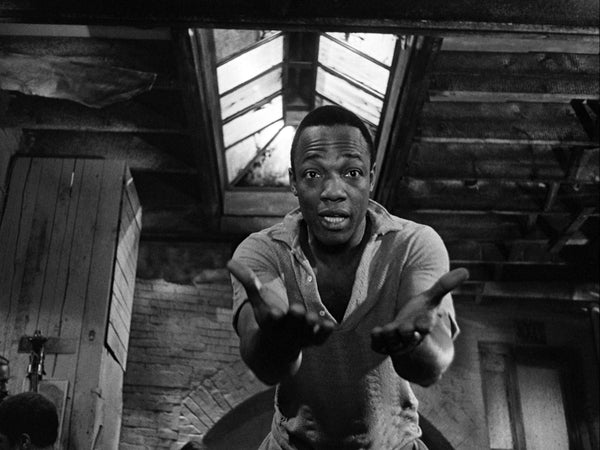
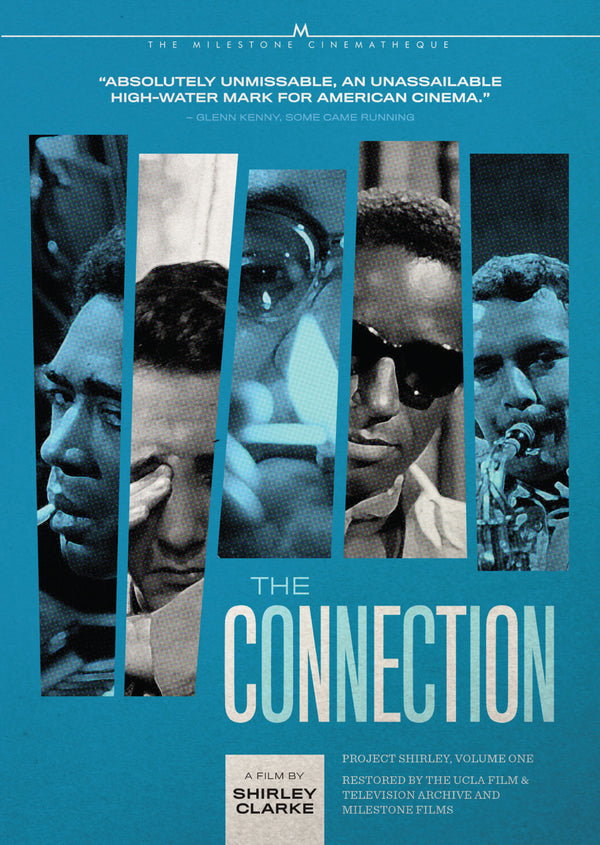
For the last few years Dennis and I have been working on a series of films that he has dubbed "Project Shirley"--a concerted effort to restore and re-release the films of an incredibly talented and largely overlooked pioneer of the American Independent Cinema Movement. Shirley Clarke started as a modern dancer and brought musicality and syncopation to all her creations--which she combined with fierce intelligence and the courage and wit to play with the medium to reveal--and conceal--all manner of "truths." Her films range from lyrical (like her early dance films) to profane and transgressive (her debut feature, THE CONNECTION), to kaleidoscopic (ORNETTE; MADE IN AMERICA and her groundbreaking video experiments), but they are never cliched or boring. 

Working with the wonderful UCLA Film & TV Archive, we were able to create beautiful prints and digital elements for THE CONNECTION and ORNETTE, which we released in theaters in 2012 (to a chorus of rave reviews). But when we began investigating Clarke's astonishing PORTRAIT OF JASON, we quickly learned that releasing film was going to be a lot more complicated.


PORTRAIT OF JASON may be Clarke's boldest and most influential film--and it is certainly one of her funniest, saddest and most outrageous. Over the course of one evening, Clarke turned her camera on the Jason Holliday and let him tell his story--or more accurately, stories. Because, Holliday (born Aaron Payne) was a man of many tales. over the course of his film-long monologue, Holliday talks about his life as a black gay man--touching on love, work, drugs, and sex. A some-time cabaret performer, he spins hilarious tales, shadowboxes with candor, and breaks your heart. The film is one of the very first LGBT films made, and one of the most honest and self-revealing. It is simply amazing.

Initially we planned to use a restoration of JASON that had been completed by a US archive. But on closer inspection, we decided that the source material (a badly worn 35mm projection print, it turned out) was just not good enough. So Dennis set out on a search to find the original film elements for the film--a convoluted odyssey that many times threatened to devolve into a wild goose chase. 

Doggedly stubborn, Dennis methodically reached out to dozen and dozen of film folks all over the world--including distributors, archivists, lab owners, writers, critics, filmmakers and editors. To give you a sense of his herculean efforts, here are (most of) the archives he corresponded with: Museum of Modern Art, NYC; Harry Ransom Center at the University of Texas at Austin; Anthology Film Archive, NYC; UCLA Film & TV Archive; British Film Institute, London; Jerusalem Film Archive, Wisconsin Center for Film at Television at the University of Wisconsin, Madison; the Swedish Film Archive and the Academy Film Archive at the Association of Motion Picture Arts and Sciences in Hollywood.

And what did he find after all that... well, not much. Or so it seemed for quite a while. Then one morning at 2:00 AM Dennis woke up and had an A-HA moment. Literally. He had done the math in his sleep and figured out the riddle. And last week (October 11) we learned that his hunch actually was a brilliant deduction. So now the game is afoot (as Sherlock said to Watson)! The elements are at the Academy Film Archive, and the only hitch is financial. Which leads inexorably to... KICKSTARTER!


We have launched a crowd-funding campaign on Kickstarter with the hope that you and other movie-minded folks will contribute to help fund this restoration. The whole thing is going to cost about $100,000, but the Archive has been kind enough to commit to paying some of those costs and we will come up with more (out of our pockets). It is the balance of $25,000 we hope you will help cover. We have some pretty nice bonuses for donors, so please check them out and give whatever seems right to you.

Many thanks!


*The only time we didn't entirely self finance was when director Steven Soderbergh gave us a substantial contribution to help clear the music rights for Charles Burnett's KILLER OF SHEEP. It was a no-questions, no-conditions gift which enabled us to release that glorious film. We will always be grateful for his timely generosity and love for film.

Posted in Academy Film Archive, Amy Heller, Association of Moving Image Archivists, Dennis Doros, documentary, historic preservation, Kickstarter, LGBT, Portrait of Jason, Shirley Clarke

1 2 3 5 Next »

Recent Articles

Tags

Subscribe to blog